


Cinerra
Tuofu Jiyuan
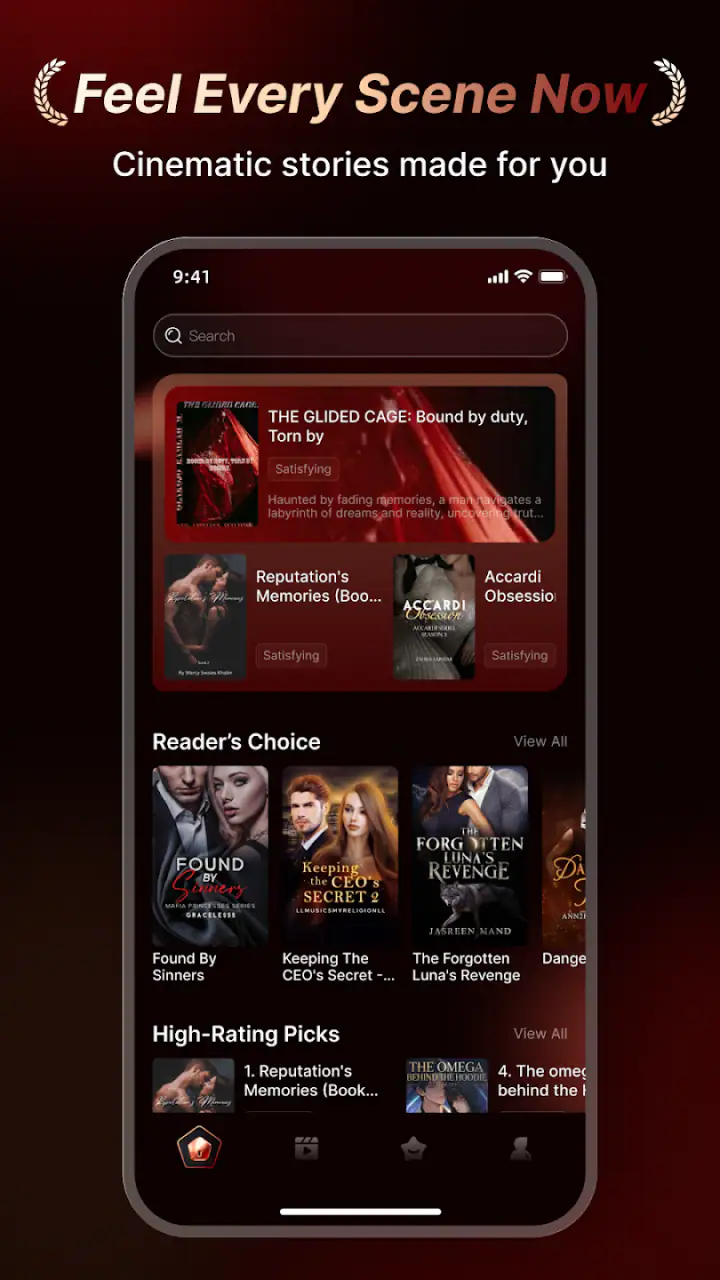
Some entertainment apps are easy to understand in a few seconds, while others need a little time before their value becomes clear. Cinerra belongs to the second group for me. It is presented as a single place for short dramas and novels, so the appeal is not simply watching clips or reading pages in isolation. The idea is to move between two story formats depending on my mood: something visual when I want a quick break, or written fiction when I would rather settle into a longer reading session.
That combination gives the app a clear identity, but it also creates expectations that are worth examining carefully. A short-drama service needs to feel quick and easy to browse, while a novel-focused service needs comfortable reading and dependable progress. In my experience, the most important question is not whether the concept sounds attractive; it is whether this particular hub feels practical enough to become part of a daily routine.
It is a free entertainment app from Tuofu Jiyuan, with an Everyone content rating and support for Android 7.0 or later. The current release is version 1.0.7. Its public reception is notably weak, with a 1.4 average from around 27 ratings and 11 written reviews, so I would approach it with realistic expectations rather than assuming a polished mainstream experience.
How Cinerra feels when I start browsing
The first useful way to judge this app is by its central promise: it brings short dramas and novels into one destination. That is more interesting than a standard video catalog because it gives me two different ways to consume the same broad type of entertainment. I can choose a visual story when I have only a few minutes, then switch to reading when I want a quieter activity that does not depend on watching.
This matters in ordinary situations. If I am waiting for an appointment, short drama episodes fit the moment better than a full film. Later, during a commute or before bed, a novel can be more convenient than keeping a video running. The useful trade-off is that I do not need separate apps for these two habits. The less obvious cost is that a combined catalog can feel less focused than an app built around only reading or only video.
Related News

Why WhatsApp Messenger Still Makes Everyday Communication Feel Easy

Jurassic World: The Game Is the Better Dino Tycoon for Strategic Players

Threads in Real Life: Who Should Join, Lurk, or Leave

How SHEIN Turned Shopping Into an Endless Content Feed

How to Make Fortnite Feel Smarter on Mobile

Should You Switch to Microsoft Outlook on Mobile?
I would not install it expecting the depth of a dedicated e-reader or the breadth of a major streaming platform. Its attraction is convenience and variety within a story-centered space. That makes it most suitable for people who enjoy switching formats and are willing to explore. If I already have a carefully organized reading app and a reliable drama service, Cinerra has to offer a smoother all-in-one routine to justify another place on my device.
Speed expectations during normal use
For this kind of app, perceived speed is shaped less by one dramatic feature and more by small transitions: opening the home screen, moving through story choices, entering an episode, and returning to a novel. I pay attention to whether browsing feels direct or whether the app makes me repeatedly wait before I can decide what to watch or read. A story hub can lose its appeal quickly if discovery feels like work.
The short-drama side naturally encourages quick decisions. I may open the app with the intention of watching only one episode, so the path from launch to playback needs to be uncomplicated. The novel side has a different rhythm. I expect to pause, return later, and continue without having to reconstruct where I stopped. These are separate performance expectations, and treating them as identical would be a mistake.
Gallery
My practical advice is to test both sides during the first session instead of judging the app only by its opening screen. Browse a drama, leave it, open a novel, and then move back again. This simple routine reveals whether the combined design feels coherent. It also shows whether the app suits the way you actually consume stories, rather than the way its store summary describes the concept.
There is another speed-related trade-off: a free app with optional purchases may encourage users to browse widely before committing attention. That can be useful when I am still looking for something appealing, but it can also make the experience feel less immediate if the catalog presents too many choices without enough guidance. I prefer using a short trial session to identify one drama and one novel, then deciding whether the app deserves regular use.
What happens during heavier entertainment sessions
Light browsing is only part of the test. A more realistic heavy-use moment is an evening when I watch several short-drama episodes and then read for a while. That combination places more demand on the device than opening the app briefly, especially because video playback and extended screen time are more intensive than simply checking a title.
I would be cautious about judging the app from a single short visit. Heavy use can expose friction that is invisible during casual browsing: longer loading between episodes, the need to reopen a story after switching sections, or a less comfortable transition from viewing to reading. These details matter because the app’s main selling point is precisely the ability to combine both formats.
For a modest phone, the sensible approach is to avoid treating Cinerra as a background companion for an entire day. Close it when I am finished, keep other demanding apps from running unnecessarily, and use a stable connection for video rather than blaming the application for every interruption caused by the network. This is not a workaround that makes the app better; it is a realistic way to reduce avoidable strain during longer sessions.
The purchase model also deserves attention during heavy use. The app is free to download, but in-app purchases range from $4.99 to $299.99 per item. That is a very wide span, and it changes how I would use the service. I would explore the free experience first, identify exactly what a purchase unlocks, and avoid tapping through payment prompts simply to continue a story. The convenience of having dramas and novels together is not enough reason to spend without understanding the value of each item.
This is one of the app’s most important practical limitations. Someone who wants unlimited, predictable entertainment at no additional cost may find the purchase structure uncomfortable. Someone who enjoys sampling stories and occasionally paying for a particular continuation may be more accepting. The right choice depends less on the headline “free” label and more on how firmly I can control my spending once I become invested in a story.
Reliability and recovering after interruptions
Reliability is especially important for an app built around serialized stories. If I am following a short drama, losing the point where I stopped makes a brief entertainment session frustrating. The same is true for a novel: reading a few pages before bed is only relaxing if returning later feels straightforward.
I look for a dependable recovery pattern after ordinary interruptions. A phone call, a low-battery warning, or switching briefly to another app should not turn a simple session into a search exercise. The useful habit is to note the title and chapter or episode before leaving, particularly during early use while I am learning how the app handles progress. That may sound minor, but it prevents a poor recovery experience from becoming a repeated annoyance.
Network changes are another realistic test. Moving from home Wi-Fi to mobile data while watching a drama can be more revealing than testing the app in ideal conditions. I would not assume that every pause is an application failure, but repeated interruptions would still affect my opinion because short-form entertainment depends on immediacy. Reading may be the better choice when the connection is unreliable, provided the relevant novel remains usable in that situation.
I also prefer to keep expectations measured because the public rating is very low. A small number of ratings cannot describe every phone or every session, but it is still a warning to pay attention during the first few days. If the app repeatedly loses my place, closes unexpectedly, or makes me restart a story, I would not force it into my routine just because the concept is appealing.
Recovery is not only about reopening the app. It is about recovering my interest. When I have only ten minutes, I do not want to spend half of that time reconstructing what I was doing. The best use case for Cinerra is therefore a user who is comfortable exploring at a relaxed pace, not someone who needs a perfectly predictable, interruption-proof reading and viewing tool.
Device age, storage, and everyday constraints
Support for Android 7.0 or later makes the app accessible to owners of older Android devices, which is useful for people who do not replace their phones frequently. Compatibility, however, is not the same as comfort. An older supported phone may open the app successfully but still feel less pleasant during video playback, rapid browsing, or long sessions than a newer device.
I would judge it on the phone I actually intend to use, not on a newer handset borrowed for a quick test. Check whether the device already struggles with other video or reading applications, and leave enough free storage for normal app operation. I am not claiming that Cinerra requires a particular amount of space or memory; the practical point is that a crowded or aging phone can make any entertainment hub feel slower and less stable.
Battery behavior also matters because the app combines video and reading. Watching several episodes is naturally more demanding than reading text, so I would use the novel section when I want entertainment without committing to a longer video session. This is a useful workflow rather than a hidden feature: choose the format according to the phone’s battery and the environment, not only according to the story.
For a family device, the Everyone rating makes the app easier to consider from an age-label perspective. Still, I would personally review the individual stories before handing the phone to a child, because an overall rating does not tell me whether every drama or novel matches my family’s preferences. That is a sensible check for any mixed-content entertainment catalog.
The app’s relatively modest reach, at over 10 thousand installs, also suggests that I should think of it as an emerging service rather than an established default. That does not automatically make it poor, but it does make device-specific testing more important. I would not recommend moving my entire reading or viewing routine to it immediately. I would first see whether it behaves well on my phone and whether its available stories are genuinely relevant to me.
Who will get the most from the combined format
Cinerra makes the most sense for a flexible entertainment user. If I enjoy short serialized dramas but also read novels, the ability to keep both habits near each other is convenient. It can work well for someone who has scattered pockets of free time: a visual episode during a break, a few pages while waiting, and a return to the same story later.
It is also a reasonable option for someone who is curious about discovering a less familiar catalog. The app’s small install base can be viewed as a limitation, but it also means the experience may appeal to people who like exploring beyond the most obvious services. I would approach that exploration with patience and a clear spending limit.
On the other hand, I would skip it if my priority is a highly refined reading environment, a huge established video library, or a completely predictable subscription model. A dedicated novel app will usually be the better choice for readers who care most about reading tools and a focused library. A dedicated streaming platform will usually suit viewers who want a mature video experience. Cinerra’s advantage is the bridge between those activities, not dominance in either one.
One realistic routine I would recommend is a two-stage trial. On the first day, browse without buying anything and select one drama plus one novel. On the next day, return to both and see whether continuing feels natural. If the drama is easy to resume, the novel is comfortable enough for a quiet session, and the app does not create distracting friction, then it may earn a place in your rotation. If not, the experiment has cost little beyond time.
That workflow also answers an important question about whether the app is worth keeping installed. The answer should depend on repeated convenience, not on the novelty of having two formats in one place. A combined catalog sounds useful, but it only becomes useful when switching between formats saves effort rather than adding another layer of browsing.
My performance verdict after weighing the trade-offs
I see Cinerra as an interesting but cautious recommendation. Its strongest idea is clear: short dramas and novels can serve different moods, and placing them together may make story discovery more convenient. The free entry point and broad device compatibility lower the barrier to trying it, while the Everyone rating makes its general positioning easy to understand.
My reservations are equally clear. The very low average rating is a meaningful warning, even though it comes from a limited number of users. The wide in-app purchase range means “free” should not be confused with unlimited access at no cost. Older devices may need a realistic trial under normal conditions, and users who demand polished, specialized tools may be happier with separate alternatives.
For me, the best way to judge its speed and stability is not by a quick launch alone. I would test the complete loop: browse, watch, switch to reading, leave, return, and continue. That exposes the parts that matter in everyday use, especially when the app is handling both entertainment formats rather than one focused task.
My bottom line is to treat Cinerra as a low-commitment experiment, not an automatic replacement for established reading or streaming apps. It is worth trying if you genuinely want one story hub for short dramas and novels and are comfortable evaluating it on your own device. I would skip it if reliability, deep specialization, or strict control over entertainment spending matters more than having both formats together.
FAQs for Cinerra
What is Cinerra, and what can I use it for?
Cinerra is an entertainment-focused app designed to help users discover and explore movies and other video content in one place. From the interface, you can browse titles, review basic information, and decide what to watch next. Its usefulness depends on the content and features available in your region, so the experience may vary between users and devices.
Is Cinerra free to download and use?
Cinerra may be available to download at no initial cost, but users should check the app’s store listing and in-app information before assuming that every feature is free. Some services may include advertising, premium content, subscriptions, or optional purchases. Review the pricing details, billing terms, and renewal conditions carefully before entering payment information.
Does Cinerra provide movies for streaming or downloading?
The availability of streaming and offline downloads can depend on Cinerra’s current features, licensing agreements, and your location. Before installing, check the official description for supported viewing options. If downloads are offered, confirm whether they are temporary, restricted to the app, or limited to premium users, since downloaded content may not function like a regular video file.
Is Cinerra available for both Android and iPhone?
Cinerra’s compatibility depends on the official versions released by its developer. Android users should verify the required Android version, device support, and download source through Google Play or the developer’s official page. iPhone and iPad users should check the App Store listing and minimum iOS or iPadOS requirements, as availability can differ by country.
Is Cinerra safe to install and use?
For the safest experience, download Cinerra only from an official app store or a verified developer link. Before installation, review the permissions requested, privacy policy, developer identity, ratings, and recent user feedback. Avoid unofficial APK files or modified versions, because they may contain harmful software. Also remember that account and viewing data may be collected according to the app’s privacy practices.
Pros
- Clean interface makes browsing movies and series quick and intuitive.
- Personalized recommendations help users discover titles matching their interests.
- Detailed title pages provide useful information before choosing what to watch.
- Search and filtering tools make finding specific content more convenient.
- Regular content updates can keep the catalog feeling fresh for returning users.
Cons
- Availability of titles may vary depending on your country or region.
- Some features may require creating an account or signing in.
- Recommendations may feel limited until the app learns your preferences.
- Streaming quality can depend heavily on your internet connection.
- The app may not support every device or operating system version.


